 A Message From Paradigm Press Below is an important message from one of our highly valued sponsors. Please read it carefully as they have some special information to share with you.
Dear reader, James Altucher here… For the last twenty years, I have been making predictions that so-called "experts" insisted would never happen. In 2007 I went on live TV and said Facebook would be worth over a hundred billion dollars. The anchors laughed at me on air. A few years later I called Apple's run to a trillion, and got the same reaction. Now I am making one of my biggest predictions yet. And it starts with recent drone footage of one of Elon Musk's rapidly expanding production facilities. What he is building inside is not an electric car, a solar panel, or a rocket ship. It is something Elon calls an "infinite money glitch." And Elon is predicting it will be the biggest product in history. Not just the biggest Tesla or SpaceX product. The biggest, period. It could enter production as soon as October 21. And based on data from the Dallas Fed, this could become a nearly $2 quadrillion opportunity by 2040. It sounds insane, and you have to see it to believe it. So, I put the whole story, and the footage, into a short presentation. Watch it before October 21. Because once that factory turns on, the secret is out. 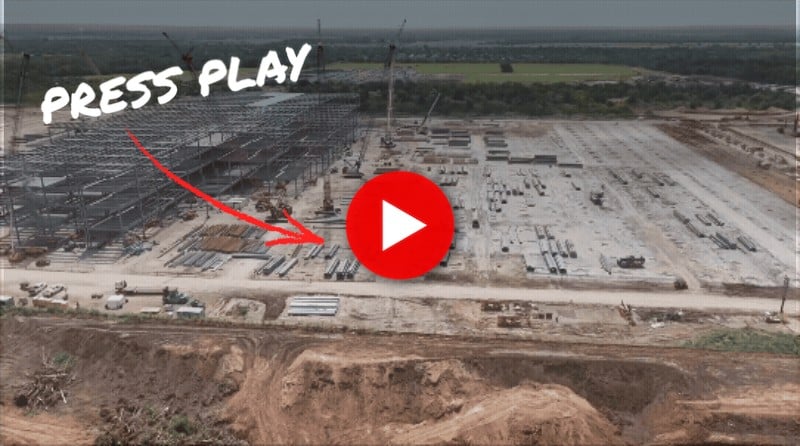
Regards, James Altucher
Additional Reading from MarketBeat
Marvell Technology’s $90 Billion Revenue Goal Puts AI Execution Under a MicroscopeWritten by Jeffrey Neal Johnson. Originally Published: 10/7/2026. 
Key Points
- Marvell Technology aims to reach $70 billion to $90 billion in fiscal 2031 revenue, up sharply from about $8.2 billion in fiscal 2026.
- The company's custom ASIC business depends heavily on hyperscale clients, since data centers already generate roughly 79% of total revenue.
- Marvell Technology’s premium valuation raises the stakes for supply-chain execution and continued AI infrastructure growth.
- Special Report: A letter from Shannon Stansberry
Marvell Technology (NASDAQ: MRVL) recently reset expectations across the semiconductor sector by projecting a fiscal 2031 revenue target of $70 billion to $90 billion. Reaching even the low end of that range would require a sustained annualized growth rate of approximately 54% over the next five years. With cloud providers locked in an artificial intelligence (AI) infrastructure arms race, Marvell Technology's aggressive pivot toward custom silicon transforms the stock into a direct proxy for global AI capital expenditures. Investors evaluating the company's premium valuation are weighing this ambitious growth narrative against the execution challenges of scaling operations to meet unprecedented data center demand. Laying the $90 Billion AI Foundation
The headline figures from Marvell's Oct. 6 Investor Day dramatically shift the baseline for what constitutes success in the semiconductor networking space. Management raised its fiscal 2028 (FY2028) revenue target to approximately $20 billion, exceeding the prior Wall Street consensus estimate of around $18.2 billion. The true catalyst driving the market's repricing is the FY2031 target of $70 billion to $90 billion. For context, Marvell Technology generated about $8.2 billion in FY2026. Reaching the $80 billion midpoint would bring annual revenue to nearly 10 times FY2026 levels and require a compound annual growth rate that few hardware manufacturers have sustained over half a decade. This projection signals a structural transition. Marvell Technology is distancing itself from its historical identity as a cyclical chipmaker exposed to consumer electronics and legacy enterprise networking. The company is actively positioning itself as a pure-play AI infrastructure provider. The market responded to this expansion of the total addressable market, which management now estimates at about $400 billion by FY2030, by pushing the share price higher as analysts raised price targets and reassessed the company's growth trajectory. Custom Chips: The Hyperscale DependencyOne of the engines driving these revised targets is the custom application-specific integrated circuit (ASIC) market. Standard merchant silicon provides an off-the-shelf baseline for general computing, but the highest volume growth is emerging in bespoke chips designed specifically for top-tier cloud service providers. Custom ASICs are engineered to exact specifications, offering superior power efficiency and optimized routing for proprietary algorithmic workloads. Because power availability is increasingly constrained in modern data centers, the energy efficiency of custom silicon has shifted from a luxury to an operational necessity. Companies like Amazon (NASDAQ: AMZN), Alphabet (NASDAQ: GOOGL), and Microsoft (NASDAQ: MSFT) are allocating billions to their physical infrastructure to support these next-generation workloads. In the second quarter of FY2027, the data center segment accounted for roughly 79% of Marvell Technology's total revenue. This concentration creates significant reliance on the capital expenditure cycles of a few key clients. If a hyperscaler delays a product refresh, pivots to a different server architecture, or reduces infrastructure spending, the downstream impact on Marvell Technology's revenue could be substantial. To defend its market share and pricing power against direct competitors such as Broadcom (NASDAQ: AVGO) in the networking ASIC space, Marvell Technology is developing a distinct technological moat. The recent showcase of industry-first 2nm optical interconnects at ECOC 2026 represents a notable hardware milestone. These interconnects facilitate the faster data transfer speeds required by advanced server clusters, potentially providing a high-margin product line that can help protect the balance sheet from standard margin compression. A secondary wave of AI spending, which is gradually shifting from initial training clusters to ongoing inference infrastructure, provides a near-term revenue tailwind. That trend could help bridge the gap between current FY2027 consensus estimates of about $12 billion and the highly ambitious targets set for FY2028 and beyond. Securing the Hardware to Hit High TargetsSetting an $80 billion revenue midpoint on a presentation slide requires vision, but physically manufacturing and delivering that volume of silicon requires flawless logistics. Investors tracking this narrative need to monitor supply chain execution as closely as new customer wins. The AI substrate deal with AT&S, expanded on Sept. 22, 2026, serves as a critical execution indicator. The substrate is the physical foundation on which advanced semiconductor dies are mounted, and shortages of this component have bottlenecked the industry in the past. By securing manufacturing capacity early, Marvell Technology is actively mitigating supply chain constraints that could otherwise derail the volume ramp projected for the end of the decade. This operational preparation is occurring against a backdrop of a demanding valuation. Marvell currently trades at a forward price-to-earnings ratio near 94, leaving the stock with virtually no room for error. Institutional capital often tolerates multiples at this level only when the price-to-earnings-to-growth ratio is expected to normalize over time. If earnings grow in lockstep with the 54% top-line growth target, a 94x multiple today would compress significantly on a five-year forward basis. Still, a valuation at this level requires near-perfect execution, meaning any missed product cycle or supply chain hiccup could trigger a sudden multiple contraction. Adding context to the valuation, investors should closely track liquidity events involving corporate leadership. Recent filings show stock sales by Marvell Technology's CEO and COO. While insider selling can occasionally signal a shift in internal expectations, these transactions occurred alongside the authorization of a $5 billion share repurchase program. This buyback program gives the board the capacity to retire up to 7.8% of outstanding shares. Mechanically, the program can absorb routine executive stock sales, helping support the float and return capital to shareholders. Weighing the Price of AI InfrastructureThe underlying fundamentals present a high-stakes scenario. The transition to custom AI silicon offers a credible path to the $90 billion revenue ceiling, provided the broader AI spending cycle remains intact across the technology sector. The conservative balance sheet, highlighted by a debt-to-equity ratio of about 0.27 and a current ratio near 3.17, offers the financial stability necessary to fund ongoing research and development without heavily leveraging the enterprise. The heavy concentration of revenue among a few hyperscale clients requires careful monitoring. Investors buying at current levels are effectively paying a premium for earnings projected to materialize years from now. Those with a higher risk tolerance might view Marvell Technology as a potentially important component of a broader AI infrastructure portfolio, capitalizing on the strong capital expenditure growth of top-tier cloud providers. Cautious investors may prefer to monitor quarterly data center revenue growth metrics and custom chip deployment announcements to confirm that the aggressive FY2031 trajectory remains on schedule before initiating a position. . |



0 Comments:
Post a Comment
<< Home