 A Message From Porter & Company Editor’s Note: Make time for this today – Porter’s explosive new documentary exposes the President’s plans to replace the U.S. dollar. If you have retirement savings, a stock portfolio, or a family depending on you financially, you need to watch it right now.
In the early 19th century, whale oil was among the most valuable commodities on Earth. It lit the lamps of America. It lubricated the machines of the Industrial Revolution. Entire coastal economies like New Bedford, Nantucket, and New London thrived because of it. The scarcity was real. Whales were finite after all – and the expertise to hunt them, process them, and bring the oil to market took decades to develop. That scarcity underpinned an entire monetary ecosystem. Then in 1859, Edwin Drake struck oil in Titusville, Pennsylvania. Kerosene arrived. It was cheaper, more abundant, and much more powerful. The whalers didn't disappear overnight. The compression was gradual – and then suddenly catastrophic. Within two decades, the whaling industry had effectively collapsed. The scarcity hadn't disappeared. It had migrated. And the fortunes built on whale oil migrated with it – to the men who understood where scarcity had moved. This is what a great repricing looks like. A friend of mine, financial writer Garrett Baldwin, has a phrase for what happens to the people who don't move in time. He calls it the "flooding layer." The idea is simple – every time the scarcity underpinning an entire industry evaporates, it creates two groups of people: Those who own the new chokepoint. And those standing in the flooding layer – watching everything they built get washed away. The brutal truth is that the people in the flooding layer almost never see it coming. Not until the compression is irreversible. For a more recent example, let’s look at Kodak. In 1988, Eastman Kodak employed nearly 150,000 people. It was one of the most valuable companies in America. Its business was built on a form of scarcity that seemed unassailable – the chemistry, the film, the paper, the processing infrastructure required to capture and develop a photograph. That scarcity evaporated when the smartphone put a camera in every pocket. Kodak didn't fail because folks stopped taking pictures – it failed because the scarcity that underpinned its entire business model migrated. In 2012, Kodak filed for bankruptcy. That same year, Facebook acquired Instagram – a company with 13 employees – for $1 billion. Instagram had captured the value that Kodak lost. The scarcity had migrated from chemistry to connectivity and the people who understood that got very rich. Those left standing in Kodak's flood plain did not. Today I’d like to show you that we’re living through another great repricing – one that is already making millions of dollars for those who understand where the scarcity is migrating once again. To understand what’s unfolding we have to rewind to a secret deal that’s profoundly shaped everything about our lives, for more than half a century. Kissinger’s Dollar Reset In July 1974, Treasury Secretary William Simon boarded a secret flight to Saudi Arabia. Under the orders of Nixon’s top national-security advisor Henry Kissinger, what he proposed to King Faisal in the coastal city of Jeddah would become the greatest financial arrangement in the history of the world. Saudi Arabia would price its oil in dollars. Within a year, every other OPEC nation followed suit. The U.S. dollar was now backstopped by the one commodity the entire modern world could not function without. That scarcity minted fortunes on an almost unimaginable scale – creating an environment that allowed America to spend trillions, with the rest of the world picking up the tab. And for the companies at the chokepoints of the petrodollar, it was like rocketfuel. ExxonMobil up 9,700%. JPMorgan up 6,000%. Lockheed Martin up 14,400%. Microsoft up 479,000%. America transformed from a nation of 180,000 millionaires in 1974 to nearly 24 million today. But the petrodollar arrangement – Kissinger's deal in the desert – officially expired without fanfare in June 2024. China has slashed its U.S. Treasury holdings by more than 45% from the peak. The BRICS nations dumped $47 billion in a single month. Central banks are swapping dollars for gold at the fastest pace since the Cold War. Ray Dalio – founder of the world’s largest hedge fund – calls it the "breakdown of the monetary order." The flooding layer has shifted again. And millions of Americans are standing in it right now – in cash, in the wrong stocks, in retirement funds built for a monetary order that is being quietly dismantled beneath their feet. Trump’s New Order While most Americans have been distracted by the tariffs, UFO memes, and the war in Iran, Trump has been quietly assembling the most ambitious monetary reset in half a century. Bypassing Congress, away from the mainstream press, Trump is executing his audacious repricing through a series of executive orders and bilateral deals most people have never heard of… Channelling more than $3 trillion in public and private capital toward a single strategic objective: Securing the physical foundation that makes artificial intelligence possible. I’m talking about the priceless minerals, chips, energy, and infrastructure without which no AI model runs, no data center operates, no breakthrough is possible. This is where scarcity is migrating. And over the past few years, the companies sitting at the chokepoints of this new order are already soaring: Vertiv – up more than 500%. GE Vernova – up nearly 700%. Arista Networks – up more than 750%. Taseko Mines – up 370%. The titans of industry who understood that kerosene would reprice energy got rich. As did the investors who understood that the petrodollar would send a wave of capital into a specific band of stocks sitting at the chokepoints. The ones who didn't understand this found themselves stranded on the flood plains of history – wondering how they missed it. I want to help you avoid that fate. I've spent months identifying the companies I believe sit at the narrowest chokepoints of what I'm calling Trump’s Silicon Dollar. In my new briefing I lay out the full story and how it could impact your money. I'll show you why Trump has declared a national emergency to secure the most critical AI resources – and why every move he's made, from his obsession with Greenland to the war in Iran to his trip to Beijing, connects back to it. I’ll also reveal the name and ticker of one asset you can buy today to get immediate exposure to what's unfolding. And details on five stocks sitting at the chokepoints of Trump's plan – positioned to do what ExxonMobil and Lockheed Martin did for the investors who understood the petrodollar. You’ll also discover why a critical event this year could accelerate the wealth divide this great repricing is already creating. Get the full story here. 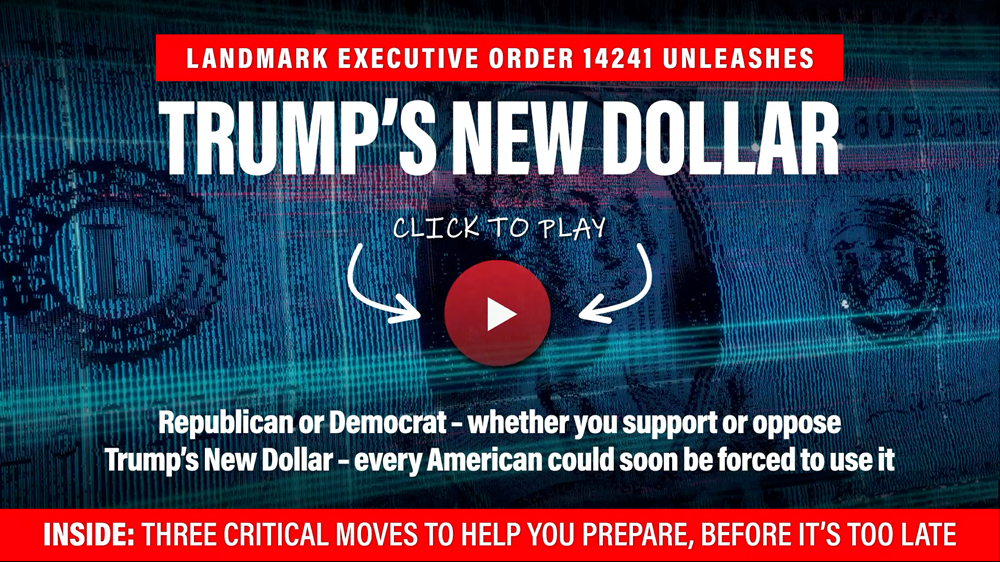
Good investing, Porter Stansberry
Just For You
3 Stocks Built for Higher Rates—And 2 That Could BreakAuthor: Bridget Bennett. Published: 9/8/2026. 
Key Points
- Rising Treasury yields near 4.79% reflect heavy AI-related corporate borrowing rather than economic weakness, analysts Joel Litman and Rob Spivey argue.
- Negative free cash flow at Alphabet and Amazon can signal productive investment rather than distress, mirroring Amazon's cash-burning AWS buildout years.
- ASML, GE Vernova, and Comfort Systems show strong pricing power and backlogs, while Oracle and Rocket Companies face weakening returns relative to borrowing costs.
- Special Report: The REAL Reason Trump is Invading Iran
The August jobs report landed Friday morning with 162,000 new positions, well above forecasts of 56,000, and the bond market read it as another reason to brace. The 10-year Treasury yield pushed back toward 4.79%, near its highest level since late 2023, and the odds of a hike at the Fed's Sept. 15-16 meeting are now close to a coin flip. That comes a week after Fed Chair Kevin Warsh used his Jackson Hole keynote to say inflation is still running too hot. The headlines have reached for the scariest available framing: rates at a 25-year high.
That framing hides more than it reveals. The last 25 years produced the cheapest money in recorded history, including a long stretch of negative real rates. Five percent only looks extreme against that backdrop. The number that actually matters is the spread between what a company pays to borrow and what it earns on that money. A 5% Rate Only Hurts Companies Earning Less Than 5%Joel Litman and Rob Spivey of Altimetry Research view the current rate move as a symptom of corporate demand for capital rather than a verdict on the economy. Estimates put AI-related corporate debt issuance at roughly $1.5 trillion this year, and that supply is doing more to push up the long end of the curve than fears of default. A company borrowing at 5% to fund projects returning 30% or 40% will take that trade every time. A company borrowing at 5% to fund projects returning 4% is quietly destroying itself. The rate is the same, but the outcome is completely different. Negative Free Cash Flow Is Not Always a WarningThe clearest example is the one spooking investors right now. Alphabet Inc. (NASDAQ: GOOGL) posted its first negative free cash flow since its 2004 IPO, burning $5.9 billion in the second quarter as capital expenditure (CapEx) hit $44.9 billion. Amazon.com, Inc. (NASDAQ: AMZN) swung to negative $7.6 billion on a trailing basis. Microsoft Corporation (NASDAQ: MSFT) is the last of the group still generating cash. Spivey's point is that negative free cash flow driven by investment, rather than operating losses, has historically been a buy signal. Amazon went deeply cash-flow negative while building AWS in the late 2000s, and that stretch marked one of the best entry points in the stock's history. The Home Depot, Inc. (NYSE: HD) and Starbucks Corporation (NASDAQ: SBUX) turning free cash flow positive in the early 2000s signaled the opposite: growth had stopped. The most aggressive version of that pattern is happening outside the public markets. Litman and Spivey have spent months tracing how capital raised around SpaceX (NASDAQ: SPCX) is being routed into xAI and the suppliers serving both, and their research on where that money is actually landing names companies most investors have not yet connected to the buildout. ASML Holds the One Bottleneck Nobody Can CopyASML Holding N.V. (NASDAQ: ASML) builds the extreme ultraviolet (EUV) lithography systems required to make the world's most advanced chips, and it has no competitor. Order intake has been strong enough for the company to raise full-year guidance to €43 billion to €45 billion (approximately $49.9 billion to $52.2 billion) and lay out a two-year capacity sprint: roughly 65 low-NA EUV systems this year, an increase of about 30% in 2027, with another 30% under study for 2028. Management says that additional output is already close to fully spoken for. Pricing power is the newer part of the story. ASML has signaled that it wants to charge for the full value of its tools rather than throughput alone, a shift that has reportedly frustrated Taiwan Semiconductor Manufacturing Company Limited (NYSE: TSM). Litman's favorite illustration of the moat: A Chinese manufacturer took an ASML machine apart to reverse-engineer it and could not put it back together. The blueprint was never the product. The calibration is. GE Vernova Is Sold Out Into the Next DecadeNuclear may be the long-term answer to AI's power problem, but gas turbines are the only answer available today. GE Vernova Inc. (NYSE: GEV) ended the second quarter with 116 gigawatts of gas turbine equipment across backlog and slot reservation agreements, up from 100 gigawatts three months earlier. It now expects at least 125 gigawatts under contract by year-end. Manufacturing is scaling toward 20 gigawatts of annualized output, with a stated path to 30 gigawatts by 2030. The volatility since June has tracked sentiment around the AI buildout rather than anything in the numbers. The services and maintenance stream attached to every installed unit is the part the market keeps underweighting, and Altimetry's adjusted return on assets for the business runs near 20%, compared with a reported figure closer to 5%. Comfort Systems Turned HVAC Into an AI TradeComfort Systems USA, Inc. (NYSE: FIX) is a mechanical and electrical contractor, which sounds unglamorous until you look at the backlog: $14.06 billion at the end of the second quarter, up from roughly $8 billion a year earlier. Technology work now accounts for 58% of revenue. The advantage is modular prefabrication. Building as much as possible in owned facilities cuts time on-site, helping the company sidestep the labor scarcity choking competitors. Only a company with this footprint can run that model at scale. 2 Stocks the Rate Math Is Working AgainstOracle Corporation (NYSE: ORCL) is the exception among the big spenders. S&P cut it to BBB- in July, one notch above speculative grade, and free cash flow ran negative $23.7 billion in fiscal 2026. Shares are down roughly 20% year to date. The problem is not the spending; it is what the spending buys. Oracle is building capacity closer to what Digital Realty Trust, Inc. (NYSE: DLR) or Equinix, Inc. (NASDAQ: EQIX) sells than to the services layer that the hyperscalers monetize. Litman and Spivey see returns on assets sliding sharply as that investment comes online, and fiscal first-quarter results on Sept. 10 will be the next read on whether the market agrees. Rocket Companies, Inc. (NYSE: RKT) is a different problem with the same root. After absorbing Redfin and Mr. Cooper, Rocket touches roughly one in six United States mortgages. That scale is an asset when rates fall and a liability when they do not, while corporate borrowing demand is doing its best to keep the long end elevated. Altimetry's read is that the current price requires returns on assets to roughly triple. Watch the spread between borrowing costs and returns on invested capital, not the headline rate. That gap separates the companies compounding through this cycle from those financing their own decline. . |



0 Comments:
Post a Comment
<< Home