
A Message From Profits Run
In case you missed it...
...make sure you get your free "Simple Options Trading For Beginners" book before your link expires.

I eventually plan to charge money for this training, so do yourself a favor and download it now...
That way, no matter what it costs in the future, you'll have a free copy.
Sound good?
FREE: Simple Options Trading For Beginners << Get It Now
Good Trading,
Bill Poulos
p.s. Go here to save a copy of your "Simple Options Trading For Beginners" book while it's still free.
Tuesday's Featured Content
How Much of Tesla's Robotaxi Future Is Already Priced In?
By Sam Quirke. Date Posted: 11/5/2026.
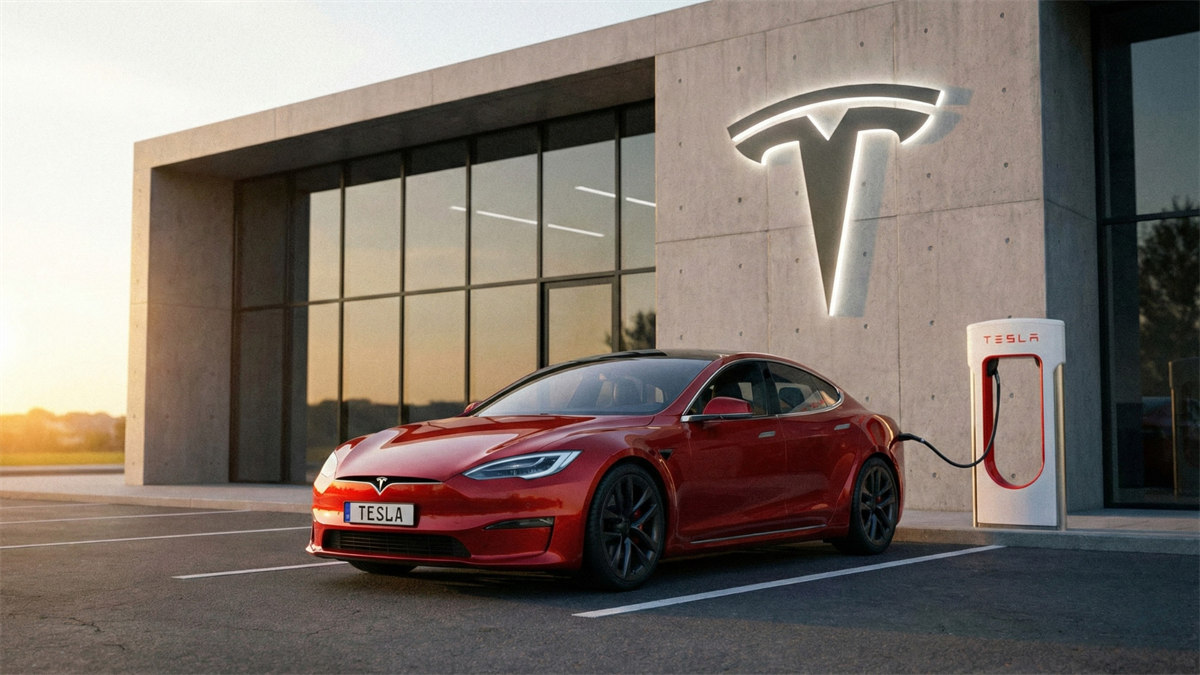
Key Points
- Tesla expanded its robotaxi service to Fort Worth as its driverless operations continued to grow beyond Austin.
- Tesla reported 1.74 million paying FSD customers in Q3 2026, with monthly subscriptions accounting for about half.
- Tesla's high earnings multiple leaves little room for delays in turning its autonomy ambitions into substantial profits.
- Special Report: I'm handing you this one free
Tesla Inc. (NASDAQ: TSLA) has spent years promising investors a self-driving future. Increasingly, it’s delivering on that promise. More than 1.7 million Tesla customers now pay for Full Self-Driving (FSD) software, and the company’s robotaxi service is expanding. Tesla launched its Austin robotaxi service in June 2025 with safety monitors and began offering limited driverless passenger rides in January 2026. In early November, the service expanded to Fort Worth.
Tesla’s stock rally reflects growing expectations for its autonomy business. Shares rose roughly 28% from the end of July through Nov. 3, after reaching an intraday high above $414 on Nov. 2. The trouble is the math. At more than 400 times trailing earnings, Tesla is priced for substantial future profits from autonomy—profits that have yet to materialize at scale.
So the big question for anyone tempted to buy around here is whether this latest rollout proves the company is growing into its valuation, or whether Tesla shares are still asking for too much, too soon.
Tesla’s Robotaxi Rollout Moves Beyond Austin
To Tesla’s credit, the autonomy story is no longer just a slide in a keynote. Austin may have been the test case, but Tesla’s expansion of its driverless robotaxi service into Fort Worth is an important milestone.
It follows a series of positive signs. Management has said Tesla’s Austin Cybercab fleet grew roughly tenfold following its September launch, while the broader robotaxi service logged nearly 2 million cumulative unsupervised miles by the end of Q3. With Dallas also on the map and customer-owned cars potentially joining the fleet around Q2 2027, the network is widening quickly.
It’s real, but it’s early. These fleets are still small compared with those of peers, and robotaxi rides have yet to generate meaningful profit for Tesla. The expansion to Fort Worth further shows that the technology is hitting the road, but it doesn’t yet prove it’s a profitable business.
FSD Adoption Is Becoming Real Revenue
Underpinning the robotaxi push is FSD’s software business, which is already scaling. More than 1.7 million customers worldwide now pay for FSD in their cars, and Tesla’s third-quarter earnings results showed that number climbing sharply over the past year. More than 75% of North American vehicle deliveries included an FSD subscription sign-up.
Roughly half of those customers are on monthly subscriptions, and recurring revenue is estimated to be approaching the $1 billion mark. That makes FSD a real distribution channel, even if the questions that matter most—retention and churn—still need to be answered. For the bulls, it’s the clearest evidence yet that Tesla can sell autonomy as software at scale, and it helps justify the triple-digit valuation.
European Demand Shows Signs of Revival
The other part of the equation is good old-fashioned demand. In October, Tesla registrations rebounded sharply across several European markets, with year-over-year increases of 248% in Sweden and 131% in Norway. Tesla was Norway’s best-selling car brand for the month, according to registration data. After months of soft European numbers, that’s a welcome signal heading into the fourth quarter.
On that score, however, the picture isn’t uniformly bright. Although Tesla registrations also rose 34% in Denmark, the company trailed several Chinese competitors there, and Chinese rivals are gaining ground quickly across the region. One strong month in a couple of countries is encouraging, but it isn’t yet proof of a broad recovery. Tesla still has to turn that interest into durable profit.
Tesla’s Valuation Leaves Little Room for Error
Which brings us back to the stock’s valuation. Tesla trades at more than 400 times earnings, a multiple that only makes sense if autonomy—along with its energy and robotics ambitions—becomes an enormous profit center.
That valuation also assumes Tesla’s traditional car business can bankroll those emerging businesses until they stand on their own. The danger is that Tesla’s car sales may struggle to do so, as the company’s automotive margins remain somewhat thin and earnings continue to fall.
In other words, the bulls need a lot to go right. To be sure, Tesla still carries a MarketBeat consensus rating of Moderate Buy, a sign that Wall Street likes the direction of travel. But a more nuanced read might be that while the latest robotaxi update helps justify the hype, it doesn’t yet justify the price.
If Tesla can keep scaling its fleet and turn FSD into a major profit engine, then the current valuation might make sense, and the stock could end up looking cheap in a couple of years. But if signs emerge that this will take longer than planned, the market may be quick to reprice the stock accordingly.
. |



0 Comments:
Post a Comment
<< Home