
A Message From Behind the Markets
Dear Friend,
I owe you one.
So here's a free stock pick.
It's a little-known company that collects every time Elon builds.
Not Tesla. Not SpaceX.
The chip inside every Tesla and Starlink dish? Elon doesn't own it. He pays this company to use it.
Now he's filed to launch 1,000,000 AI satellites.
One royalty. A million times over.
That could mean a 100X bigger bill.
Dylan believes it takes off December 8th.
Miss that, and you're watching from the sidelines.
Claim your free pick here >>
The Buck Stops Here,
Kelly Maguire
Behind the Markets
P.S. It's a public stock. A few clicks and you own it. Just do it before December 8th.
Get the pick before December 8th here >>
Additional Reading from MarketBeat.com
The Next Nuclear Opportunity May Be in Fuel, Not Reactors: 3 Stocks to Watch
Reported by Nathan Reiff. First Published: 11/17/2026.
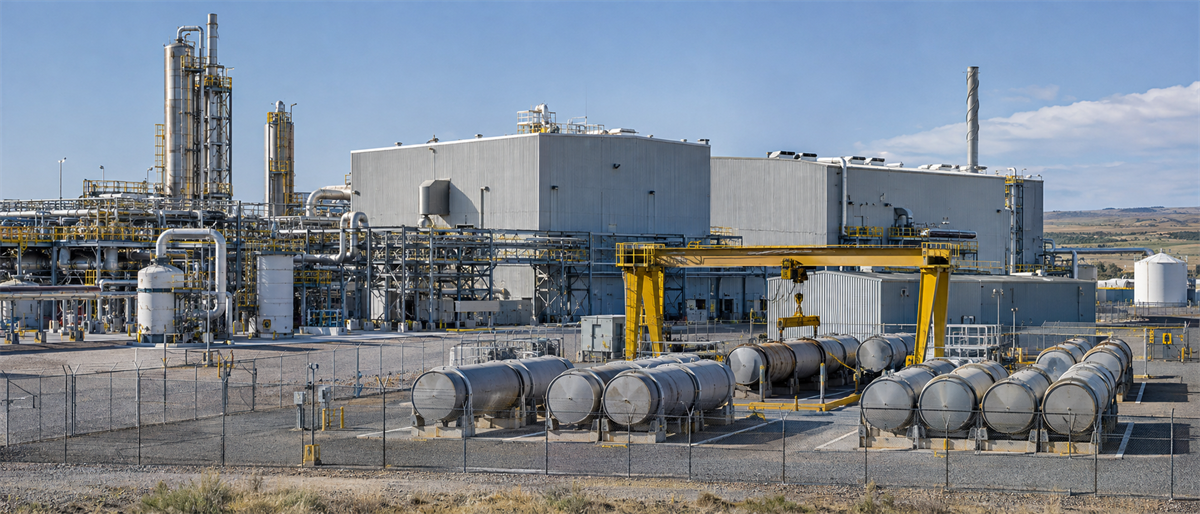
Key Points
- Tech giants pursuing AI-driven power needs are increasingly turning to nuclear energy, drawing investor attention to an underinvested uranium fuel supply chain.
- Cameco, Centrus Energy, and BWX Technologies each occupy distinct, critical niches in uranium mining, enrichment, and fuel fabrication amid looming Russian import restrictions.
- Despite significant year-to-date share price declines across all three companies, analysts maintain favorable ratings and project meaningful upside potential, particularly for BWXT.
- Special Report: Bitcoin fell $66,000. This isn't about crypto.
Investors focused on AI may have missed that many of the biggest tech names are quietly pivoting toward nuclear energy in search of reliable, affordable power. Microsoft Corp. (NASDAQ: MSFT), for example, is involved in the relaunch of Three Mile Island, while Alphabet Inc. (NASDAQ: GOOGL) and Kairos Power partnered on a fleet of small modular reactors (SMRs).
In response, investors have shifted their attention to SMR developers like NuScale Power (NYSE: SMR)—companies focused on SMRs but with a limited history, if any, of generating commercial kilowatt-hours. This overlooks a crucial step in the nuclear energy supply chain: fuel. Western uranium mining, conversion, and enrichment are chronically underinvested and fall short of the demand for nuclear energy. The 2024 Prohibiting Russian Uranium Imports Act may force domestic companies to seek new fuel sources when its waivers expire in 2028. As a result, nuclear fuel companies like Cameco Corp. (NYSE: CCJ), Centrus Energy Corp. (NYSE: LEU), and BWX Technologies Inc. (NYSE: BWXT) may become the picks and shovels of nuclear power.
CCJ: Key Positioning in the Supply Chain, but Contract and Cost Challenges
Cameco stands out as the largest publicly traded uranium producer in the Western Hemisphere, with operations in Canada, Kazakhstan, and elsewhere. The company controls conversion capacity at a key facility in Ontario, making it an essential non-Russian provider of the gas required for enrichment.
The firm has also established a position in reactor services and fuel fabrication through its investment in Westinghouse, diversifying its business and giving it exposure to other key bottlenecks in the supply chain.
Still, Cameco has lagged behind the rising price of uranium, in part because of its disappointing Q3 2026 earnings, which included lower production and higher costs. The company also has long-term contracts with pricing provisions that can limit its immediate upside from higher spot prices. While Cameco has strong potential to become a leading nuclear fuel provider, investors should keep an eye on its costs and efficiency, as well as how it navigates new contracts. If successful, the company could reverse its year-to-date (YTD) decline of almost 27% and begin to realize some of the upside analysts have predicted.
LEU: A Critical Role in HALEU Production, Though Reliance on Russia Poses a Potential Challenge
As the only domestically licensed facility producing high-assay low-enriched uranium (HALEU), Centrus has a particularly crucial role in generating nuclear power from U.S. sources. Centrus' partnership with the Department of Energy makes it a strong candidate to benefit from a reactor fuel shortage.
However, investors should keep in mind that Centrus has traditionally relied on enriched uranium from Russia, thanks to waivers allowing imports. If the waivers are canceled as regulations tighten, the company may suddenly need to significantly increase domestic capacity, potentially leading to a major revenue drop in the meantime. If the waivers continue—or if U.S.-Russia tensions ease and restrictions are loosened—Centrus could lose some of its advantageous position.
This uncertainty may be part of the reason LEU shares have not performed better this year. The stock is down significantly, declining more than 59% YTD despite broad support from analysts.
BWXT: Multiple Angles in the Nuclear Energy Space
BWX Technologies provides nuclear components, fuel, and services, and has recently found success in nuclear reactors and related equipment for the U.S. Navy. The lucrative partnership has boosted the firm's backlog, even as its most recent earnings report was mixed: BWXT beat adjusted earnings per share (EPS) expectations by seven cents but fell more than $17 million short of revenue estimates, despite 10% year-over-year (YOY) growth.
Demand for BWXT's products is significant, and the company has also successfully improved productivity, manufacturing volumes, and free cash flow.
Investors should be aware that BWXT may be a less direct play on the nuclear energy industry's fuel segment than the companies above, although upgrades to its existing Lynchburg TRISO fuel facility could at least quadruple its output.
Still, BWXT shares have also suffered this year, falling by about 32% YTD. That has done little to deter Wall Street analysts, who remain favorable toward the company and assign it an overall Moderate Buy rating. The average analyst price target implies more than 75% potential upside, while earnings are projected to grow by about 10% in the coming year.
. |



0 Comments:
Post a Comment
<< Home