 A Message From Porter & Company Editor’s Note: Make time for this today – Porter’s explosive new documentary exposes the President’s plans to replace the U.S. dollar. If you have retirement savings, a stock portfolio, or a family depending on you financially, you need to watch it right now.
In the early 19th century, whale oil was among the most valuable commodities on Earth. It lit the lamps of America. It lubricated the machines of the Industrial Revolution. Entire coastal economies like New Bedford, Nantucket, and New London thrived because of it. The scarcity was real. Whales were finite after all – and the expertise to hunt them, process them, and bring the oil to market took decades to develop. That scarcity underpinned an entire monetary ecosystem. Then in 1859, Edwin Drake struck oil in Titusville, Pennsylvania. Kerosene arrived. It was cheaper, more abundant, and much more powerful. The whalers didn't disappear overnight. The compression was gradual – and then suddenly catastrophic. Within two decades, the whaling industry had effectively collapsed. The scarcity hadn't disappeared. It had migrated. And the fortunes built on whale oil migrated with it – to the men who understood where scarcity had moved. This is what a great repricing looks like. A friend of mine, financial writer Garrett Baldwin, has a phrase for what happens to the people who don't move in time. He calls it the "flooding layer." The idea is simple – every time the scarcity underpinning an entire industry evaporates, it creates two groups of people: Those who own the new chokepoint. And those standing in the flooding layer – watching everything they built get washed away. The brutal truth is that the people in the flooding layer almost never see it coming. Not until the compression is irreversible. For a more recent example, let’s look at Kodak. In 1988, Eastman Kodak employed nearly 150,000 people. It was one of the most valuable companies in America. Its business was built on a form of scarcity that seemed unassailable – the chemistry, the film, the paper, the processing infrastructure required to capture and develop a photograph. That scarcity evaporated when the smartphone put a camera in every pocket. Kodak didn't fail because folks stopped taking pictures – it failed because the scarcity that underpinned its entire business model migrated. In 2012, Kodak filed for bankruptcy. That same year, Facebook acquired Instagram – a company with 13 employees – for $1 billion. Instagram had captured the value that Kodak lost. The scarcity had migrated from chemistry to connectivity and the people who understood that got very rich. Those left standing in Kodak's flood plain did not. Today I’d like to show you that we’re living through another great repricing – one that is already making millions of dollars for those who understand where the scarcity is migrating once again. To understand what’s unfolding we have to rewind to a secret deal that’s profoundly shaped everything about our lives, for more than half a century. Kissinger’s Dollar Reset In July 1974, Treasury Secretary William Simon boarded a secret flight to Saudi Arabia. Under the orders of Nixon’s top national-security advisor Henry Kissinger, what he proposed to King Faisal in the coastal city of Jeddah would become the greatest financial arrangement in the history of the world. Saudi Arabia would price its oil in dollars. Within a year, every other OPEC nation followed suit. The U.S. dollar was now backstopped by the one commodity the entire modern world could not function without. That scarcity minted fortunes on an almost unimaginable scale – creating an environment that allowed America to spend trillions, with the rest of the world picking up the tab. And for the companies at the chokepoints of the petrodollar, it was like rocketfuel. ExxonMobil up 9,700%. JPMorgan up 6,000%. Lockheed Martin up 14,400%. Microsoft up 479,000%. America transformed from a nation of 180,000 millionaires in 1974 to nearly 24 million today. But the petrodollar arrangement – Kissinger's deal in the desert – officially expired without fanfare in June 2024. China has slashed its U.S. Treasury holdings by more than 45% from the peak. The BRICS nations dumped $47 billion in a single month. Central banks are swapping dollars for gold at the fastest pace since the Cold War. Ray Dalio – founder of the world’s largest hedge fund – calls it the "breakdown of the monetary order." The flooding layer has shifted again. And millions of Americans are standing in it right now – in cash, in the wrong stocks, in retirement funds built for a monetary order that is being quietly dismantled beneath their feet. Trump’s New Order While most Americans have been distracted by the tariffs, UFO memes, and the war in Iran, Trump has been quietly assembling the most ambitious monetary reset in half a century. Bypassing Congress, away from the mainstream press, Trump is executing his audacious repricing through a series of executive orders and bilateral deals most people have never heard of… Channelling more than $3 trillion in public and private capital toward a single strategic objective: Securing the physical foundation that makes artificial intelligence possible. I’m talking about the priceless minerals, chips, energy, and infrastructure without which no AI model runs, no data center operates, no breakthrough is possible. This is where scarcity is migrating. And over the past few years, the companies sitting at the chokepoints of this new order are already soaring: Vertiv – up more than 500%. GE Vernova – up nearly 700%. Arista Networks – up more than 750%. Taseko Mines – up 370%. The titans of industry who understood that kerosene would reprice energy got rich. As did the investors who understood that the petrodollar would send a wave of capital into a specific band of stocks sitting at the chokepoints. The ones who didn't understand this found themselves stranded on the flood plains of history – wondering how they missed it. I want to help you avoid that fate. I've spent months identifying the companies I believe sit at the narrowest chokepoints of what I'm calling Trump’s Silicon Dollar. In my new briefing I lay out the full story and how it could impact your money. I'll show you why Trump has declared a national emergency to secure the most critical AI resources – and why every move he's made, from his obsession with Greenland to the war in Iran to his trip to Beijing, connects back to it. I’ll also reveal the name and ticker of one asset you can buy today to get immediate exposure to what's unfolding. And details on five stocks sitting at the chokepoints of Trump's plan – positioned to do what ExxonMobil and Lockheed Martin did for the investors who understood the petrodollar. You’ll also discover why a critical event this year could accelerate the wealth divide this great repricing is already creating. Get the full story here. 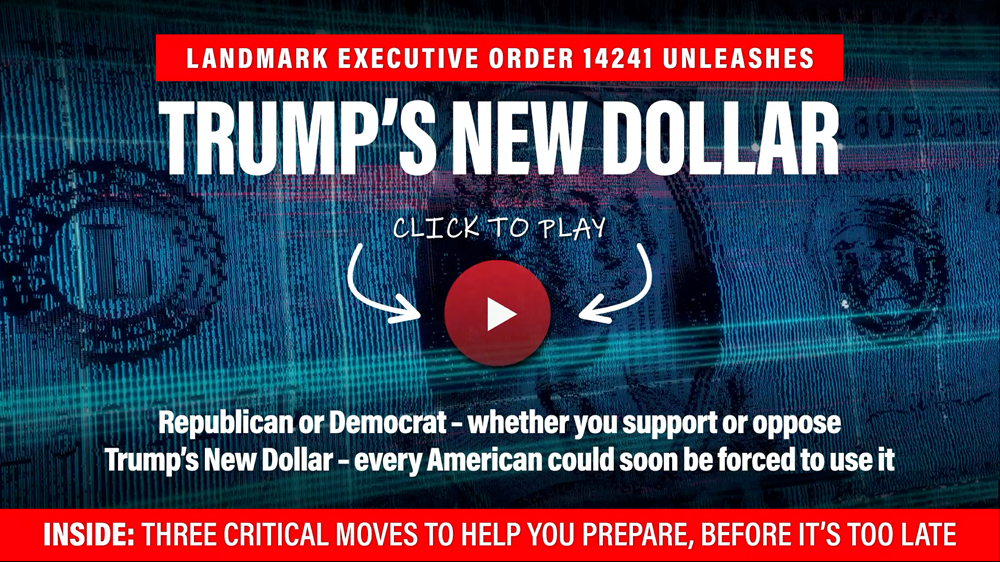
Good investing, Porter Stansberry
This Month's Bonus Content
Deutsche Bank Makes a Contrarian Call on Netflix—What Does It Mean for Investors?Author: Sam Quirke. Article Published: 9/30/2026. 
Key Points
- Deutsche Bank upgraded Netflix to Buy while cutting its price target to $95 and lowering earnings estimates, betting valuation has reset enough for upside.
- Evercore ISI raised its price target to $110, citing stronger market penetration, lower churn, and live programming like WWE as subscriber catalysts.
- HSBC and Wells Fargo turned bearish, downgrading Netflix and citing YouTube competition, decelerating revenue, and streaming fatigue ahead of earnings in three weeks.
- Special Report: Porter flew 3,300 miles to investigate this system
Shares of Netflix Inc. (NASDAQ: NFLX) have been stuck in a multimonth downtrend and, at $70, are trading close to where they were nearly two years ago. That kind of stagnation would test any investor's patience, especially with earnings less than three weeks away. Yet one recent move by a major bank has caught attention precisely because it seems to defy logic. Deutsche Bank earlier this week upgraded its rating on Netflix to Buy while simultaneously cutting its price target and lowering its earnings estimates.
At first glance, the move looks contradictory. But it reveals something important about how Wall Street separates near-term reality from longer-term opportunity. Deutsche Bank isn't saying Netflix's earnings outlook has improved. It's saying the stock has become cheap enough relative to the company's strategic position that the risk-reward has flipped decisively in investors' favor. Whether that thesis holds depends on what is revealed in the earnings report due in three weeks. Inside the Reset in ExpectationsWhile the firm raised its rating on the stock, Deutsche Bank analyst Bryan Kraft also reduced his price target from $100 to $95 and lowered his operating-income and free-cash-flow estimates. The reductions acknowledge that the company's near-term growth trajectory may be less robust than the bank previously modeled, but the upgrade to Buy signals confidence that the stock's valuation has reset enough to compensate. In other words, lower earnings on a much lower multiple can still offer upside if the long-term opportunity remains intact. Kraft’s bullish thesis rests on several points. International engagement has grown year over year for the past four consecutive six-month periods, and more than 60% of Netflix's production now happens outside the U.S., creating a content advantage that competitors struggle to replicate. He also flagged progress in Netflix’s platform expansion and the ongoing rollout of AI in production, personalization, and advertising as reasons to be bullish. If this argument holds, even a stock with lowered estimates could still offer substantial upside if expectations have fallen even further. Further Reasons to Be BullishThe good news for the bulls is that Deutsche Bank isn't alone in finding the current risk-reward setup compelling. Evercore ISI recently raised its price target on Netflix to $110 while maintaining an Outperform rating. That implies upside of more than 55%. The team cited survey evidence of stronger U.S. and Japanese market penetration and lower churn intent, while also emphasizing live programming as a subscriber catalyst. Netflix becomes the exclusive Japanese home for WWE starting Oct. 1, and the historical record is worth noting: Six of Netflix's 10 strongest new-member sign-up days over the past five years occurred when major live events were available. Management's third-quarter guidance also supports this broader monetization narrative. Netflix has said revenue growth should come from membership increases, pricing, and higher advertising revenue, with improvements to its ad technology stack, demand sources, measurement, and fill rates all representing potential monetization opportunities. If advertising can grow faster than traditional revenue, or if the company can layer incremental ad revenue on top of a maturing subscriber base, even modest subscriber growth could drive meaningful earnings leverage. Why the Bears DisagreeThat said, not every major analyst sees a bargain. HSBC downgraded Netflix this month from Buy to Hold and cut its price target to $76, arguing that YouTube represents too great a competitive threat to viewer time and creator economics. The bear case points to weaker reception for Netflix originals, streaming fatigue across the sector, and potential pressure on retention, pricing power, and advertiser appeal. HSBC's take is straightforward: Revenue is decelerating, advertising remains a relatively small contributor, and the company may be approaching maturity faster than new monetization initiatives can compensate. Wells Fargo also joined the bearish side this month, cutting its rating on the stock to Underweight and bringing its price target all the way down to $57. That implies a drop of about 18% from where Netflix shares are currently trading and should be enough to make even the most faithful bull a little nervous going into next month's report. The Earnings Inflection PointWith earnings due in around three weeks, the market will increasingly focus on advertising revenue growth, membership and pricing trends, and evidence that international engagement is translating into actual revenue and retention. The central question is whether Netflix is moving from a subscriber-led growth model into a broader monetization machine or slowing down faster than these new initiatives can offset. Deutsche Bank's contradictory-sounding update resolves itself once you separate the two questions. The upgrade isn't a bet that Netflix's near-term earnings are improving—they're not. It's a bet that the valuation has reset enough that the longer-term opportunity no longer requires perfection to work out. For a stock that's been treading water for two years, that distinction could matter more than the price target cut. . |



0 Comments:
Post a Comment
<< Home