 Better than SpaceX? Grab this ticker instead. 
Larry Benedict generated $274 million for his clients by finding the trade most missed. He says The Final Phase of Elon's Master Plan is about to trigger one of the biggest wealth transfers in market history. He's already identified the ONE ticker positioned to capture it. It isn't SpaceX, Tesla, or anything you'd expect. He's giving away the name, free. Click here to get the full details before the window closes.
Further Reading from MarketBeat.com
What IBM's $10-Billion Quantum Project Means For Smaller PlayersWritten by Nathan Reiff. Date Posted: 6/3/2026. 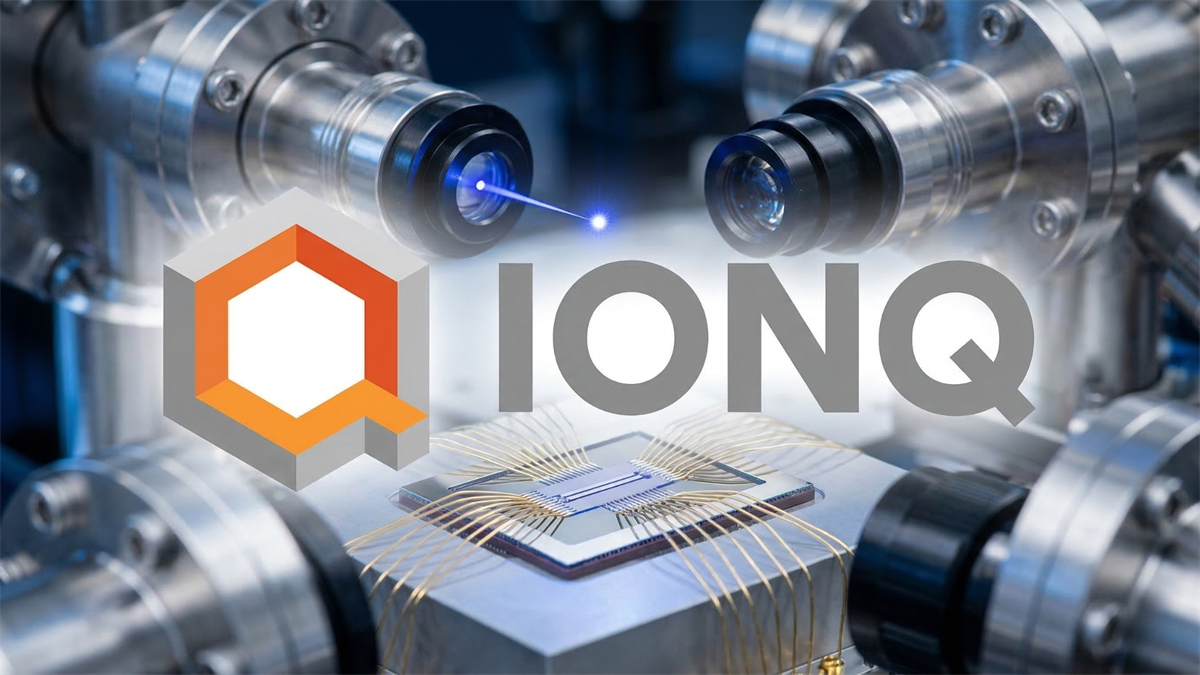
Key Points
- IBM is dedicating $10 billion in quantum computing investments over the next five years, as the company doubles down on its R&D and scaling efforts in the space.
- The announcement comes shortly after the U.S. Department of Commerce said it plans to provide IBM with $1 billion in funding to support superconducting foundry efforts.
- Smaller quantum firms like IonQ and Rigetti could be in a difficult spot, as they are not able to match spending with legacy giants like IBM.
- Special Report: ALERT: Drop these 5 stocks before the market opens tomorrow!
IBM Corp. (NYSE: IBM) may be doubling down on quantum computing, and that puts smaller players like IonQ Inc. (NYSE: IONQ) and Rigetti Computing (NASDAQ: RGTI) in a difficult position. The U.S. Department of Commerce recently tapped the tech giant to receive $1 billion in federal funding to support a new foundry for quantum-grade superconducting wafers, while smaller rivals like Rigetti are likely to receive only a fraction of that amount. Then, IBM announced in early June that it plans to spend $10 billion of its own money on major quantum computing developments over the next five years. These two developments highlight just how much of an advantage a legacy tech player like IBM has over much smaller pure-play quantum firms. While some of these dedicated quantum rivals have tried to build up cash reserves—to varying degrees of success—the reality is that none of them is likely to be in a position anytime soon to rival IBM's spending on a dollar-for-dollar basis. So what can they do to stay competitive as this 115-year-old behemoth leans into quantum? Distinguishing Technology Will Be Key, and IonQ May Be on the Right Path
With IBM slated to receive half of the U.S. Commerce Department's $2 billion in quantum computing funding, it has a huge advantage even before dedicating its own resources. IonQ is in a particularly tough position because it was not among the companies named by the Commerce Department for funding. For IonQ, the key will be competing with IBM on its own terms, which likely means differentiating its approach from IBM's superconducting qubits and manufacturing scale. Fortunately, IonQ could be in a position to do just that. The company's focus on trapped-ion quantum computers is unique and could support an approach with superior connectivity, efficiency, or other advantages. One important factor will be how IonQ's technology scales. With a Q1 2026 pre-sale of the company's first chip-based 256-qubit system, IonQ is seeing commercial traction pick up. That is a key advantage over other pure-play quantum firms that have struggled more significantly with sales momentum and, in particular, with revenue generation outside of large institutional clients. However, whether that means IonQ's technology can scale at the same pace remains to be seen. Rigetti May Seek Competitiveness on a Smaller ScaleRigetti is also unlikely to come anywhere near rivaling IBM's balance sheet for the foreseeable future, and the company also uses a superconducting qubit approach similar to IBM's. This may make it more difficult for Rigetti to distinguish itself technologically compared with IonQ. To stay competitive, Rigetti will need to demonstrate the superiority of its architecture when it comes to gate fidelities and speeds, error mitigation, and similar metrics. Investors should watch for signs that Rigetti's performance per qubit or performance per dollar is competitive with IBM's. If that proves to be the case, even if Rigetti remains much smaller in scale than its larger rival, it may be able to draw continued investor interest. Rigetti may also have an advantage in its pre-existing fabrication know-how. As a specialized manufacturer, the company can strengthen its partnerships with government agencies and labs, universities, defense contractors, and similar clients, benefiting from its early entrance into this space even as it remains smaller than IBM's planned foundry operations. Investors should keep in mind that wins for IBM don't necessarily mean losses for other smaller firms in the quantum space. Indeed, if IBM successfully anchors domestic production, it could help smooth out supply chains and reduce costs for other U.S. firms. Moreover, industrywide government investment may help create a larger market for everyone. Another key consideration is the potential reach of quantum computing as it continues to develop. IBM's 90+ quantum systems and massive enterprise customer base are an advantage, but quantum has the potential to extend across countless industries, from drug discovery and materials science to national security and all kinds of optimization. There may not be a need for individual firms to try to cover all of these areas, but as the technology continues to proliferate, further specialization and targeting may help companies distinguish themselves and find a profitable niche. Nonetheless, the near-term news is quite positive for IBM, as the company's shares have nearly doubled in the last month. Close to two-thirds of analysts reviewing IBM stock call it a Buy, though there is some concern across Wall Street that the recent rally may not last. . |



0 Comments:
Post a Comment
<< Home