Ticker Revealed: Pre-IPO Access to "Next Elon Musk" Company
Key Points
- IonQ doesn't want to just be a quantum computing researcher; it wants to own the full stack.
- The company's planned acquisition of SKWT is a move to accelerate its quantum development by bringing manufacturing under its umbrella.
- While the deal poses risks, IonQ clearly is not afraid to take big swings as it works to win the quantum race.
- Special Report: Nothing will create greater fortunes than this convergence
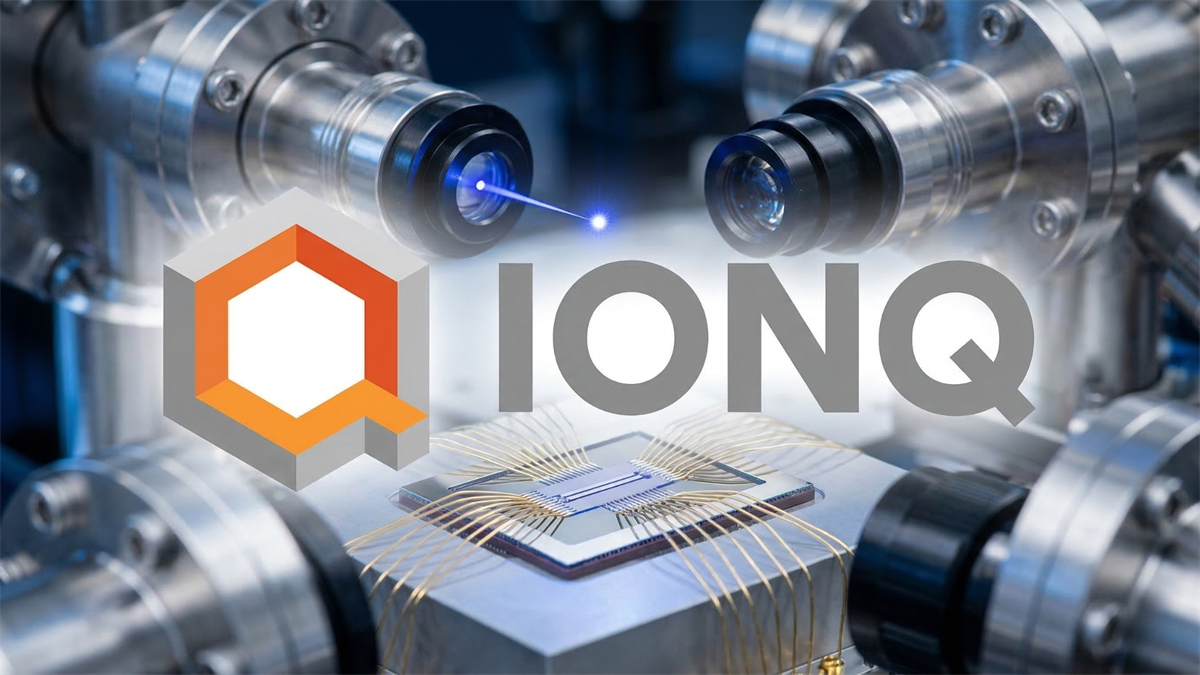
IonQ (NYSE: IONQ) is one of the leading stocks in the quantum computing industry. The firm made a big move in 2026 as it looks to differentiate itself from peers. In late January, IonQ announced a definitive agreement to acquire SkyWater Technology (NASDAQ: SKYT) for approximately $1.8 billion.
IonQ says that this merger sets it apart as the “Only Vertically Integrated Full-Stack Quantum Platform Company” and accelerates its “fault-tolerant quantum computing roadmap." Let’s break through the financial and technical jargon in these statements to understand the real implications this has for the industry and why investors should care.
Are You Overpaying Your Capital Gains Tax Bill?
If you've sold investments or property in the last year, you may be able to reduce capital gains taxes depending on your situation. Take this free 2-minute quiz to get matched with a fiduciary advisor in your area who may be able to help you keep more of what you've built.
Take the free quiz.
IonQ: One Fish in a Sea of Quantum Approaches
IonQ is one of many companies working to develop fault-tolerant quantum computing. Fault-tolerant quantum computing means developing the technology from an experimental stage to one that can reliably solve complex problems.
Consulting firm Bain & Company estimates that quantum computing could unlock up to $250 billion in value across industries like pharmaceuticals, finance, logistics, and materials science.
There are several different approaches to quantum computing. IonQ uses the “trapped ion” approach. Google parent company Alphabet (NASDAQ: GOOGL) and International Business Machines (NYSE: IBM) are pursuing the “superconducting gate-based” approach, and D-Wave Quantum (NYSE: QBTS) is using quantum annealing.
The differences between these approaches are outside the scope of this analysis, but the main takeaway is the same: none is close to achieving fault tolerance.
This is where SkyWater Technology becomes interesting.
SkyWater: An Approach-Agnostic Quantum Enabler
SkyWater is not working to develop quantum computers itself. Rather, it is a development and manufacturing partner for various quantum companies. Essentially, it collaborates with developers to design quantum systems and then transitions into manufacturing them.
One of the key benefits of SkyWater’s model is that it works with quantum computing developers, regardless of their approach. The firm’s approach-agnostic strategy allows it to generate revenues from quantum research today. Additionally, by having partnerships across many approaches, they could eventually benefit as a manufacturing partner for whichever approach proves most successful.
In its Q3 2025 earnings, SkyWater reported its “strongest ever quarter for quantum computing-related revenue," positioning itself to exceed 30% revenue growth among quantum customers in 2025. It also signed four new quantum customer engagements. Clearly, SkyWater is gaining traction with its approach-agnostic model. However, the calculus just changed.
3 Signs It May Be Time to Switch Financial Advisors…
Your goals aren't being heard, you're making costly tax mistakes, or your portfolio strategy may not be aligned with market conditions. This free quiz matches you with vetted fiduciary advisors who serve your area — each legally bound to work in your interest. No cost, no commitment.
Find your matches today.
Merger Accelerates IonQ’s Development, But May Undercut SKYT’s Message
Through the merger, IonQ is now bringing its quantum research expertise and SkyWater’s quantum manufacturing expertise under one roof. In doing so, IonQ believes it can accelerate its path to building fault-tolerant quantum technology and become the industry leader.
For example, the company believes the deal will allow it to accelerate the development of its 2 million qubit chips by up to a year. IonQ also believes the deal will enable it to push down its costs to an industry-leading level.
However, following the acquisition, SkyWater is clearly less approach-agnostic. The companies state that SkyWater will continue to work with other quantum computing companies. However, the combined firm now has a significant interest in making IonQ’s approach the most successful. It's very reasonable to question whether SkyWater’s quantum customers will want to continue working with a company that is now owned by their competitor. This raises concerns around how much more quantum computing-related growth SkyWater will generate going forward.
However, even if SkyWater loses quantum customers, this is a risk that IonQ likely sees as well worth taking, given the merger's development advantages. This is particularly true, considering that SkyWater’s quantum revenue likely isn’t that large.
SkyWater notes that quantum-related revenue in its Advanced Technology Services (ATS) segment rose by over 30% in 2025. At the same time, overall ATS revenue dropped 11% to $212.5 million. This means that although quantum grew quickly, because it accounted for a small portion of ATS revenue, overall ATS sales still fell significantly. Furthermore, ATS only accounted for 48% of SkyWater’s total revenue of $442.1 million. This data leads to the conclusion that quantum still remains a small part of SkyWater’s current revenue base.
IONQ & SKYT: A Potentially Game-Changing Quantum Partnership
IonQ shares are down over 20% since the SkyWater announcement, and the stock is down approximately 60% from its highs. Meanwhile, the company may significantly strengthen its position in the quantum computing landscape if the deal goes through. Additionally, IonQ’s combined revenue would likely exceed $550 million annually when adding SkyWater’s sales. That’s more than four times the $130 million in revenue IonQ generated on its own in 2025.
Still, the combined company’s cash from operations in 2025 would have been around -$310 million. IonQ will have to pay hundreds of millions in cash to finance the deal, but it also has almost $2.4 billion in cash, equivalents, and short-term investments. This should give it the ability to keep investing and bleeding cash for years.
Overall, quantum stocks remain risky in general, but the SkyWater acquisition could provide significant long-term benefits that allow IonQ to separate itself from the pack.
Read this article online ›
The best investment opportunities don't wait. Get our research and stock ideas delivered straight to your smartphone—so you never miss a market-moving opportunity. Our text alerts ensure you see timely stock ideas and professional research reports instantly, whether you're in a meeting, commuting, or away from your desk.
Get Text Alerts from American Market News (free)



0 Comments:
Post a Comment
<< Home